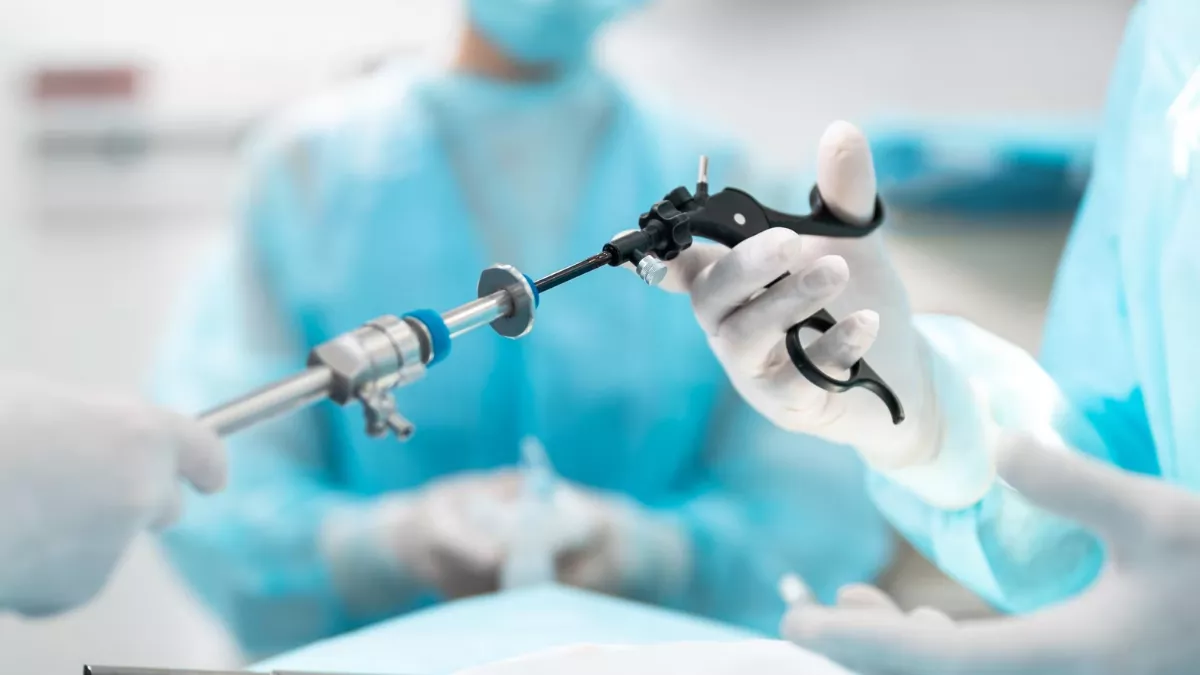
The Pitt — Episode 2, ER scene:
"Lots of swelling. I can't see the cords. To the right. The left. Yeah, it really distorted from the trauma, and the edema's only going to get worse... We're down to 85 [oxygenation]. All right, pull out. I-gel, bag and crike. I-gel, please... Sats are up with the I-gel." — Trauma Team
One of the most terrifying scenarios in emergency medicine is "CICO" (Cannot Intubate, Cannot Oxygenate). When anatomy is destroyed and the standard breathing tube fails, doctors need rescue devices to buy time. In Episode 2 of The Pitt, the team faces exactly this with Ben Kemper and turns to a life-saving device: the I-gel.
What is the I-gel?
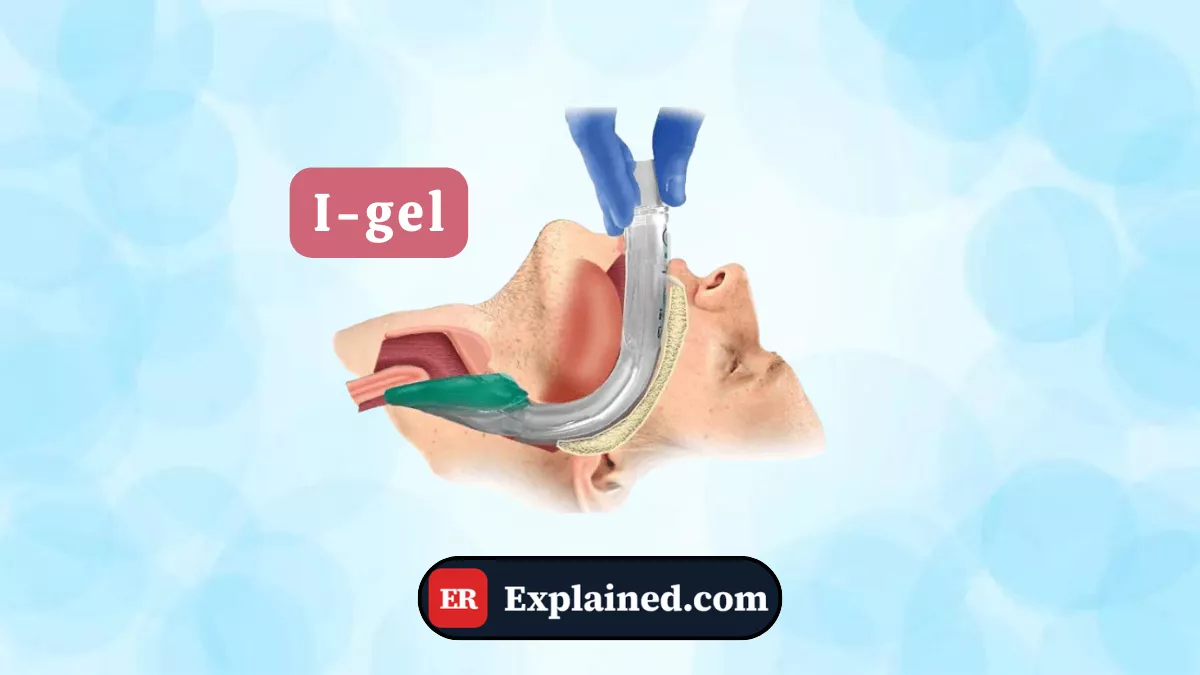
The **I-gel** is a type of supraglottic airway device (SAD). "Supraglottic" means the device sits *above* the glottis (the opening to the vocal cords and trachea), rather than passing through it like a traditional endotracheal tube. Visually, the I-gel is unmistakable. It consists of a firm plastic tube with a wide, soft, cushion-like end made of a medical-grade thermoplastic elastomer. This cushion has a very specific elliptical shape. The genius of the I-gel's design is that the cushion is engineered to perfectly mirror the anatomy of the human pharynx and larynx (the back of the throat). Unlike older Laryngeal Mask Airways (LMAs), the I-gel **does not have an inflatable cuff**. It does not need to be pumped with air; the gel pad itself creates a natural anatomical seal over the airway entrance.
How is it Used in the ER?
The primary advantage of the I-gel is its ease and speed of insertion. In an unconscious patient (like Ben, who received sedatives), the doctor simply: 1. Lubricates the back of the I-gel pad. 2. Holds the device and slides it "blindly" down the back of the patient's throat until they feel resistance. 3. Attaches a bag-valve-mask (ambu bag) to the end of the tube and begins ventilating. Because it naturally slots into place, it frequently does not require a laryngoscope (the tool used to see the vocal cords). This is exactly what happens in the episode: the doctor tried to intubate with the laryngoscope, couldn't see anything due to blood and swelling, so he pulled his equipment out and blindly inserted the I-gel.
Why was the I-gel a "Bridge" to Surgery?
In Ben's case, his Le Fort III fracture and neck trauma caused so much swelling (edema) that the airway was being crushed. The I-gel was inserted, and as the doctor notes, "Sats are up with the I-gel" (Ben's blood oxygen rose from a dangerous 85% back to a safe level). However, the I-gel is often considered a temporary measure in severe facial trauma. It does not protect the lungs from aspiration (blood or vomit falling into the windpipe) as well as a cuffed endotracheal tube. Therefore, the I-gel saved Ben's life by oxygenating him, but it only served as a bridge while the team prepped the instruments to cut his neck and create a definitive surgical airway. To understand the procedure that followed, read about the Emergency Cricothyrotomy.
Frequently Asked Questions
Can anyone insert an I-gel?
Because it is so intuitive and does not require visualizing the vocal cords, the I-gel is frequently used not just by doctors, but by paramedics, nurses, and even lay responders with basic training in cardiac arrest situations.
Why not leave the I-gel in forever?
The I-gel is not safe for long-term ventilation, especially in patients with a full stomach or bleeding facial trauma, because it does not seal the trachea perfectly against fluids coming from the stomach or nose. It is an excellent rescue tool but often needs to be swapped for a definitive tube in a controlled setting.
Conclusion
The I-gel is a triumph of medical equipment design. As demonstrated in the chaotic trauma scene in The Pitt, when traditional intubation fails, the ability to rapidly insert a supraglottic device and restore oxygen is the difference between life and brain death. To learn more about the standard equipment that failed in this scenario, see our post on the Video Laryngoscope.
This content is for educational and informational purposes only. It does not replace professional medical advice, diagnosis, or treatment. In case of a medical emergency, call 911/EMS immediately or go to the nearest emergency room.
References: [1] Intersurgical: i-gel supraglottic airway [2] PubMed: The i-gel supraglottic airway