The Pitt — Episode 2, ER scene:
"We'll do an open technique since we have a minute... If this was a crike that needed to happen in seconds, you could use a 10 blade, your finger, and a bougie. This is called a Weitlaner. And this is your trach hook... OK, now we're going to make a horizontal incision across the cricothyroid membrane. 4.0 Shiley next." — Dr. Langdon
When all other airway options fail, emergency physicians must cut into the patient's neck to insert a breathing tube directly into the windpipe. This procedure, called a cricothyrotomy (or "crike"), requires a specific set of surgical instruments. In Episode 2 of The Pitt, Dr. Langdon walks medical student Mel through the exact tools needed for this procedure of last resort.
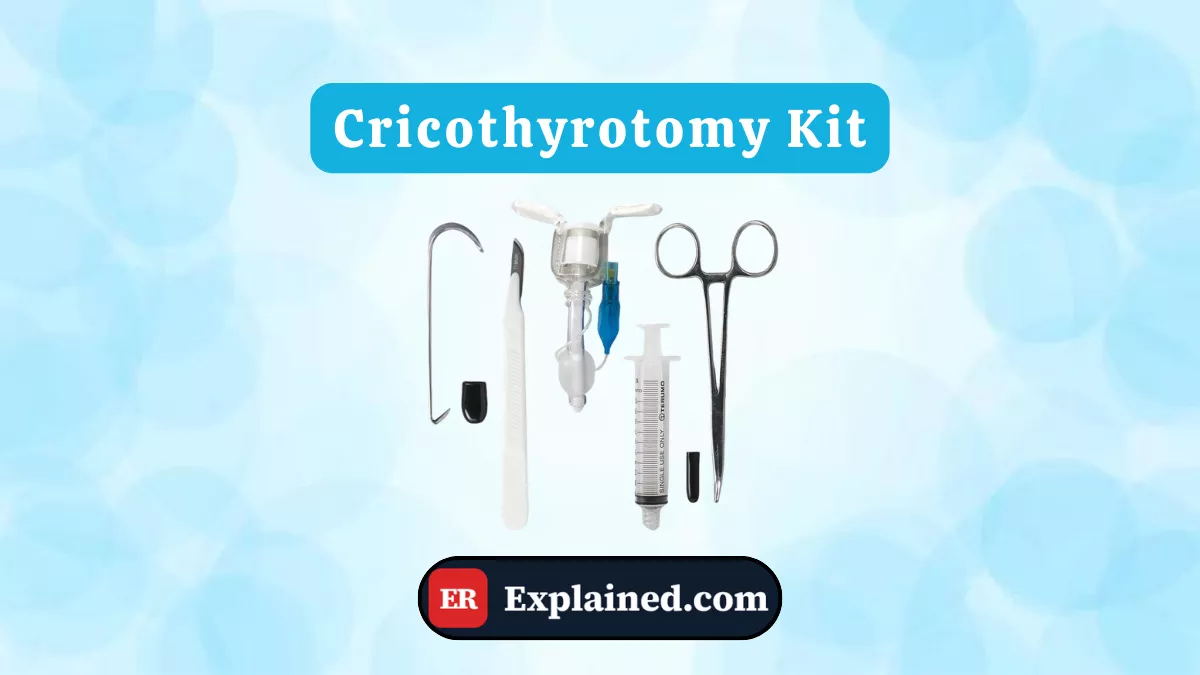
What is in a Crike Kit?
While pre-packaged commercial kits exist (often using a guidewire technique called Seldinger), the "open" or surgical technique taught in the scene relies on basic traditional surgical instruments. The essential components mentioned in the episode include: 1. 10 Blade Scalpel: The #10 scalpel blade is a large blade with a curved cutting edge. It is used to make the initial vertical incision through the skin of the neck and the horizontal incision through the cricothyroid membrane (the tough tissue between the thyroid cartilage and cricoid cartilage). The doctor notes that in a seconds-to-live emergency, only the scalpel, the doctor's finger, and a tube are needed. 2. Weitlaner Retractor: Mentioned by Dr. Langdon ("This is called a Weitlaner"), this is a self-retaining surgical retractor. It looks like scissors with prongs or teeth on the ends. Once the skin incision is made, the Weitlaner is inserted and locked in the open position to hold back the skin, fat, and muscle, giving the doctor a clear view of the membrane they need to cut. 3. Trach Hook (Tracheal Hook): This is a small metal instrument with a sharp, curved tip (like a fishhook). Once the cricoid cartilage (the hard ring of the windpipe) is identified, the hook is used to pierce it and pull it upward and forward. This stabilizes the trachea so it doesn't move while the incision is made and helps hold the hole open for the tube. 4. 4.0 Shiley Tracheostomy Tube: "Shiley" is a brand name for a tracheostomy tube. The "4.0" refers to the size (inner diameter). It is a short, curved plastic tube with an inflatable balloon (cuff) at the end. Unlike a long endotracheal tube that goes through the mouth, the Shiley is short because it enters directly into the neck. Once inserted through the hole in the membrane, the balloon is inflated to seal the airway, and the ventilator is attached to its end.
The "Scalpel-Finger-Bougie" Technique
Dr. Langdon mentions that if they only had seconds, they would use "a 10 blade, your finger, and a bougie." This is an accurate reference to the fastest surgical technique taught in modern emergency medicine: 1. **Scalpel:** Makes the incision in the skin and membrane. 2. **Finger:** The doctor shoves their index finger into the bleeding hole to keep it open and feel the trachea. 3. **Bougie:** A long, thin plastic rod (bougie) is slid over the finger and into the windpipe. The breathing tube is then slid over the bougie like a train track. To learn more about this tool, read our article on the Bougie Intubation.
The Role of End Tidal CO2
After the Shiley tube is inserted, the team checks the "End tidal CO2" and Dr. Langdon says "Yellow is yes." She is referring to a colorimetric capnography detector attached to the tube. It changes from purple to yellow when it detects carbon dioxide (which comes from the lungs). "Yellow is yes" confirms the tube is in the right place (the lungs) and not the esophagus. For more details, see the post on the Capnography Monitor.

Frequently Asked Questions
Why use a 4.0 Shiley and not a normal breathing tube?
A normal endotracheal tube is too long and floppy to be easily inserted and secured at the neck. The Shiley tube is specifically designed, curved, and has wings (flanges) that allow it to be sutured or tied tightly to the patient's neck, as the doctor instructs ("Sew it in").
What is the difference between a cricothyrotomy and a tracheostomy?
A cricothyrotomy (done in the ER) cuts through the cricothyroid membrane, which is higher on the neck and faster/easier to access. A tracheostomy (usually done in the OR) cuts through the tracheal rings lower on the neck, which is safer for long-term use but too slow for a "CICO" emergency.
Conclusion
The cricothyrotomy kit represents the final frontier of airway management in the emergency room. The teaching scene in Episode 2 of The Pitt perfectly highlights the importance of knowing the surgical tools—the scalpel, Weitlaner, hook, and Shiley tube—to turn a severely traumatized neck into a secure, definitive airway.
This content is for educational and informational purposes only. It does not replace professional medical advice, diagnosis, or treatment. In case of a medical emergency, call 911/EMS immediately or go to the nearest emergency room.
References: [1] UpToDate: Emergency cricothyrotomy in adults [2] Difficult Airway Society (DAS) Guidelines