The Deadliest Wound in Medicine
"Definitely intracardiac. And I got to tell you, this fucking hurts. Just pull the fucking nail out! That would definitely kill you." — Emergency Room
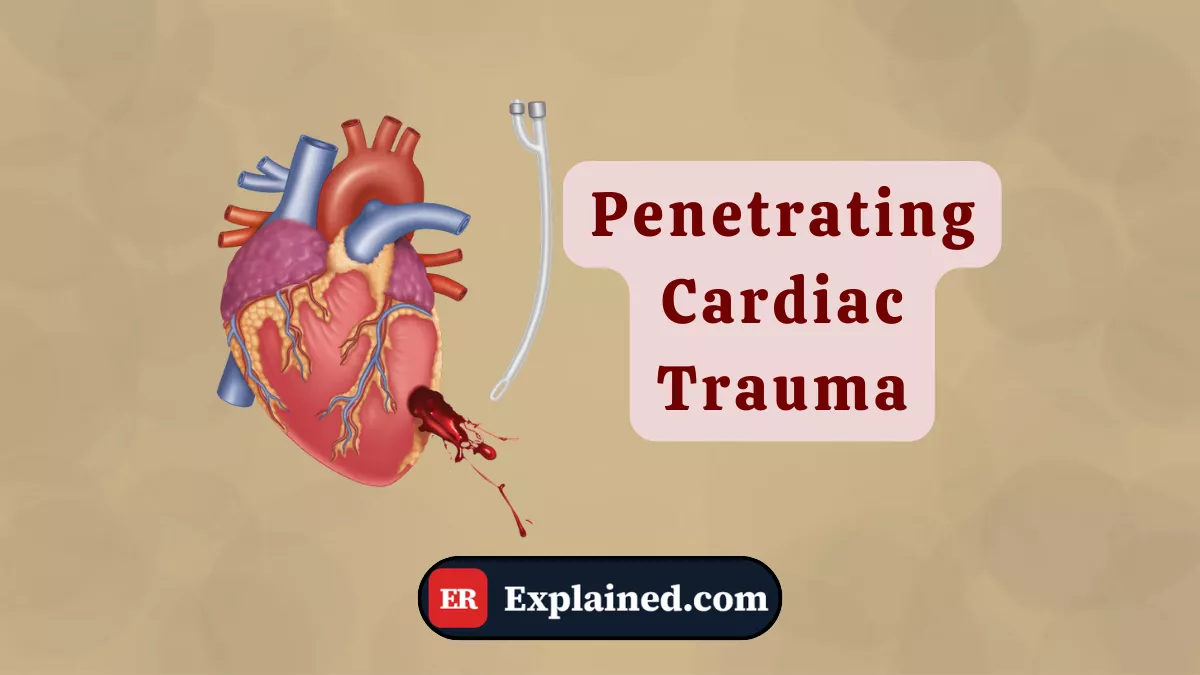
In trauma medicine, few injuries are as immediately terrifying as a foreign object piercing the heart. Known as Penetrating Cardiac Trauma, it is frequently caused by knives, bullets, or, in industrial accidents, nail guns.
The pre-hospital mortality rate (people who die before even reaching the ambulance) for these injuries approaches 90%.
However, if the patient arrives alive at the emergency room with the object still in place, they have a surprisingly high chance of survival—provided no one makes the fatal mistake of pulling the object out.
The Anatomy of the Injury
The heart is located just behind the breastbone (sternum), slightly offset to the left. Because of this anatomical position, the right ventricle (the chamber that pumps blood to the lungs) is the part of the heart most frequently punctured in frontal trauma.
When an object pierces the heart muscle, two main scenarios unfold:
- Exsanguinating Hemorrhage: Blood gushes from the hole in the heart directly into the chest cavity, causing massive hemorrhagic shock.
- Cardiac Tamponade: Blood leaks into the rigid sac surrounding the heart (pericardium), crushing the organ and preventing it from beating.
Ironically, cardiac tamponade frequently saves the patient's life temporarily. The trapped blood around the heart creates so much pressure that it acts as an internal bandage, stopping the patient from bleeding to death before reaching the hospital.
The Golden Rule: Never Remove the Object
The human instinct when stabbed or punctured is to yank the object out immediately. In emergency medicine, this is a guaranteed death sentence.
When a nail or knife pierces the heart, the object itself acts as a plug, sealing the hole it just created. If a paramedic or patient pulls the object in the street or the ER, the "plug" is removed. The beating heart will pump the body's entire blood volume out of the hole in a matter of minutes.
The strict protocol is to stabilize the object (frequently by wrapping bulky gauze around it) and transport the patient exactly as they are to the operating room.
The Race to the Operating Room
Emergency room management is an ultra-fast bridge to definitive surgery. The team must act in minutes:
- FAST Ultrasound: Used immediately to confirm the object penetrated the heart and to check for fluid (blood) in the pericardial sac.
- Cautious Intubation: The patient frequently receives Rapid Sequence Intubation using Ketamine, which keeps blood pressure high (unlike propofol, which could cause a fatal cardiovascular collapse in this scenario).
- Massive Transfusion: O-negative whole blood is hung and prepped for rapid infusion.
- Emergency Thoracotomy: If the heart stops in the ER, the doctor will make a massive incision in the chest, crack the ribs open, remove the object, and place their own bare finger in the hole in the heart to stop the bleeding while massaging the organ.
If the patient is stable (blood pressure maintained), they are rushed up the elevator directly to the cardiothoracic surgeon. There, the chest is opened in a controlled manner, and the surgeon places a "U" shaped stitch (horizontal mattress suture) around the nail. When the nail is finally pulled, the surgeon pulls the knot tight instantly, sealing the hole without losing a drop of blood.
Frequently Asked Questions (FAQ)
Can a patient fully recover from a nail in the heart?
Yes. The heart muscle heals very well if the hole is sutured cleanly. The biggest long-term risk is if the nail damaged a major coronary artery or severed one of the internal heart valves. If only the wall muscle was pierced, the patient can frequently return to a normal life in weeks.
Why is Ketamine used to anesthetize these patients?
Patients with cardiac trauma are on the verge of cardiovascular collapse. Most anesthetics (like Propofol or Fentanyl) relax blood vessels and slow the heart rate, which would kill the patient instantly. Ketamine does the opposite: it stimulates the sympathetic nervous system, driving up heart rate and blood pressure, keeping the patient alive during intubation.
What happens if the nail was rusty?
Infection is a massive secondary concern. In addition to surgery, the patient will receive broad-spectrum IV antibiotics, a tetanus shot, and the pericardial sac will be washed out with liters of sterile saline during surgery to prevent endocarditis or purulent pericarditis.
Conclusion
Penetrating cardiac trauma is the ultimate test of medical discipline. It requires doctors to resist the instinct to treat the wound in the ER, and instead act as a high-speed delivery service to the operating room. The rule is simple and brutal: the only person allowed to remove the weapon is the surgeon who already has the needle and thread ready to sew the hole shut.
This content is for educational and informational purposes only. It does not replace professional medical advice, diagnosis, or treatment. In case of a medical emergency, call 911/EMS immediately or go to the nearest emergency room.
References: [1] American College of Surgeons: ATLS Guidelines [2] StatPearls: Penetrating Chest Trauma [3] EMCrit: Penetrating Thoracic Trauma [4] UpToDate: Penetrating thoracic trauma in adults