The Pitt — Episode 2, The Fight for the Airway
"[Doctor] How we doing? [Nurse] Ketamine and sux on board. Pulse ox holding at 94. Prepping the neck just in case. [Doctor] Let's have a look. Lots of swelling. I can't see the cords... distorted from the trauma." — Trauma TeamIn emergency medicine, there is no scenario more stressful than a patient who cannot breathe. When the airway is compromised—whether by blood, vomit, or severe swelling—the medical team has only minutes to act before a lack of oxygen causes irreversible brain damage or death. In Episode 2 of The Pitt, the team faces this exact nightmare with Ben Kemper, a patient who suffered catastrophic maxillofacial trauma (a Le Fort Fracture). To attempt to secure Ben's airway, the team initiates a procedure known as Rapid Sequence Intubation (RSI). The nurse announces: "Ketamine and sux on board," referring to two of the most critical medications used in the emergency department. But what exactly is RSI, and why was this specific combination of drugs chosen?
What is Rapid Sequence Intubation (RSI)?
Rapid Sequence Intubation is the standard of care in emergency medicine for intubating patients who are not fasted. Unlike an elective surgery, where patients do not eat for 8 to 12 hours prior to anesthesia, ER patients arrive with full stomachs. If you attempt to insert an Endotracheal Tube down the throat of an awake or semi-awake patient, their gag reflex will cause them to vomit. The stomach contents can then be inhaled into the lungs, a deadly complication known as pulmonary aspiration. RSI is designed to minimize this risk. The procedure involves the near-simultaneous administration of a potent sedative (to render the patient unconscious) and a fast-acting neuromuscular blocker (to paralyze the muscles, including the vocal cords and diaphragm). By doing this rapidly, the doctor can pass the tube into the trachea before the patient has a chance to vomit.The Combination: Ketamine and Succinylcholine
The choice of medications in RSI is a split-second decision based on the patient's physiological condition. For the trauma patient in The Pitt, the choice of "Ketamine and Sux" is clinically accurate and reflects modern best practices.The Sedative: Ketamine
Ketamine is a dissociative anesthetic. Rather than simply depressing the brain like other sedatives (such as Propofol or Midazolam), it disconnects the brain from the perception of pain and the environment, inducing a trance-like state. Why was it chosen here? Trauma patients have often lost blood and have unstable blood pressure. Traditional sedatives cause a dangerous drop in blood pressure (hypotension). Ketamine, however, stimulates the release of catecholamines (adrenaline), which actually *increases* or maintains blood pressure and heart rate. This makes it the ideal induction agent for patients in shock.The Paralytic: Succinylcholine ("Sux")
Succinylcholine is a depolarizing neuromuscular blocker. It binds to the receptors on the muscles, causing a brief contraction (often seen as muscle twitches called fasciculations) followed by complete paralysis. Why was it chosen here? The greatest advantage of "sux" is its speed. It paralyzes the patient in 45 to 60 seconds, allowing for incredibly fast intubation. Furthermore, if the intubation fails, the medication wears off quickly (in about 5 to 10 minutes), allowing the patient to regain the ability to breathe on their own, provided they haven't suffered severe brain injury.Step-by-Step: How the Procedure is Performed
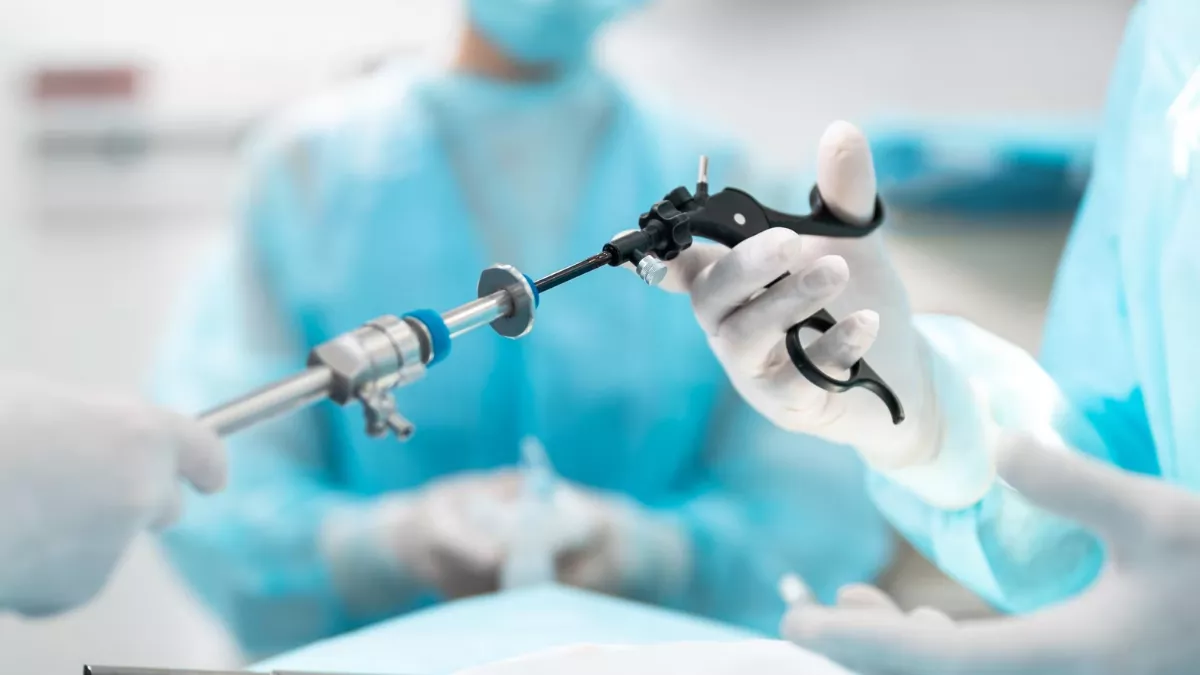
RSI is a choreographed dance in the trauma bay, often referred to by the "7 Ps": 1. Preparation: The team gathers all equipment: Video Laryngoscope, tubes, Bougie, and suction (vital in the case of bloody facial trauma). 2. Preoxygenation: The patient is given 100% oxygen through a mask for several minutes. The goal is to replace the nitrogen in the lungs with oxygen, creating a reserve that will keep the patient alive during the minutes they are paralyzed and not breathing. In the episode, the nurse notes: "Pulse ox holding at 94," indicating the oxygen saturation. 3. Pretreatment: Optional medications may be given to mitigate the side effects of intubation. 4. Paralysis with Induction: The ketamine and succinylcholine are pushed into the IV line, one right after the other. 5. Positioning: The patient's head is positioned to align the airway axes (the "sniffing" position). 6. Placement with proof: The doctor inserts the laryngoscope, visualizes the vocal cords, and passes the tube. They confirm placement using a Capnography Monitor. 7. Post-intubation management: The patient is connected to a mechanical ventilator and given continuous sedation.Why Did RSI Fail in the Episode?
Even though the team administered the drugs perfectly, the doctor states: "Lots of swelling. I can't see the cords... distorted from the trauma." This is the dreaded "Difficult Airway" scenario. The blunt force trauma broke Ben's facial bones and caused massive bleeding into the soft tissues of the neck and throat. The swelling (edema) pushed the normal anatomy out of place. No matter how relaxed the patient was made by the succinylcholine, the oral pathway was physically blocked. When oral intubation fails, the team must move to the ultimate rescue plan: the surgical airway, as we will see in the next article.Risks and Contraindications of Succinylcholine
While ketamine is generally safe, succinylcholine carries significant risks and cannot be used in everyone. The muscle depolarization it causes releases potassium into the bloodstream. In normal patients, this is negligible. However, it is absolutely contraindicated in patients with: - Severe burns (after 48 hours). - Crush injuries or Rhabdomyolysis. - Neuromuscular diseases (like Multiple Sclerosis or Muscular Dystrophy). - A history of Malignant Hyperthermia. In these patients, the potassium release can be so massive that it causes lethal hyperkalemia, stopping the heart instantly. In these cases, an alternative paralytic called Rocuronium is used.
Frequently Asked Questions (FAQ)
What is the difference between RSI and regular intubation?
In regular intubation (like in the OR), the patient is fasted, and drugs are given slowly. The doctor often "bag-mask ventilates" the patient to help them breathe while the drugs take effect. In RSI, to avoid forcing air into the stomach (which causes vomiting), no bag-mask ventilation is done between drug administration and tube placement, relying entirely on the preoxygenation phase.Does the patient feel pain during RSI?
No. The crucial part of RSI is administering the sedative (ketamine) *before* the paralytic (succinylcholine). The sedative ensures the patient is completely unconscious and feels no pain before their muscles stop working.What happens if the doctor can't place the tube after the patient is paralyzed?
This is the "Cannot Intubate, Cannot Oxygenate" (CICO) situation. The team must use rescue devices like the I-gel mask or immediately perform a Cricothyrotomy (cutting the neck to insert a tube), which is exactly what the team in The Pitt prepares to do.Conclusion
The airway scene in Episode 2 of The Pitt illustrates the high-risk, high-reward nature of Rapid Sequence Intubation. The combination of Ketamine and Succinylcholine is a powerful tool in the emergency medicine arsenal, allowing for rapid airway control in traumatized, unstable patients. However, as the episode dramatically demonstrates, pharmacology cannot overcome destroyed anatomy. Doctors must always be prepared for when RSI fails, having their backup plans ready to execute in seconds.This content is for educational and informational purposes only. It does not replace professional medical advice, diagnosis, or treatment. In case of a medical emergency, call 911/EMS immediately or go to the nearest emergency room.
References: [1] UpToDate: Rapid sequence intubation in adults for emergency medicine and critical care [2] StatPearls: Rapid Sequence Intubation [3] American College of Emergency Physicians (ACEP): Rapid Sequence Intubation [4] EMCrit: Rapid Sequence Intubation