The Pitt — Episode 2, The Invisible Threat
"[Doctor] Tense ventral compartment. Set up the STIC pressure monitor." — Trauma TeamWhen a patient survives massive trauma or a severe electrocution, the danger is far from over. In fact, some of the most devastating complications develop silently under the skin hours after the initial event. In Episode 2 of The Pitt, the trauma team is treating a man who was electrocuted by power lines. After reviving him from cardiac arrest using Defibrillation, the doctor notes that the patient's arm is rock hard and swollen ("tense ventral compartment"). Instantly recognizing the danger, the doctor orders a crucial diagnostic procedure: Compartment Pressure Monitoring using a STIC device. If they don't act quickly, the patient's own body will crush the nerves and blood vessels in his arm, leading to inevitable amputation.
What is Compartment Syndrome?
To understand the procedure, you must first understand the anatomy. The muscles in our arms and legs are not just hanging loose under the skin; they are grouped into enclosed sections called "compartments." Each compartment is wrapped in a strong, unyielding web of connective tissue called fascia. Fascia is great at keeping muscles in place, but it has a fatal design flaw: it does not stretch. If a muscle inside the compartment is severely damaged (by a broken bone, crush injury, or electrical burn), it will begin to swell and bleed. Because the fascia cannot expand, the fluid has nowhere to go. The pressure inside the compartment builds rapidly, crushing the veins, arteries, and nerves. This is Acute Compartment Syndrome. As the blood supply is cut off, the muscle tissue begins to die (necrosis). If left untreated within 6 to 8 hours, the damage is irreversible.What is the STIC Monitoring Procedure?
Diagnosing compartment syndrome is often clinical, based on the classic "6 Ps": Pain (out of proportion to the injury), Pallor, Paresthesia (numbness), Pulselessness, Paralysis, and Poikilothermia (coolness). However, in unconscious, sedated, or intubated patients (like the electrocution patient in The Pitt), they cannot tell you they are in pain. In these cases, doctors must physically measure the pressure. They use an intra-compartmental pressure monitor, often referred to by the brand name, such as the STIC device (Stryker Intra-Compartmental Pressure Monitor).How the Procedure is Performed Step-by-Step
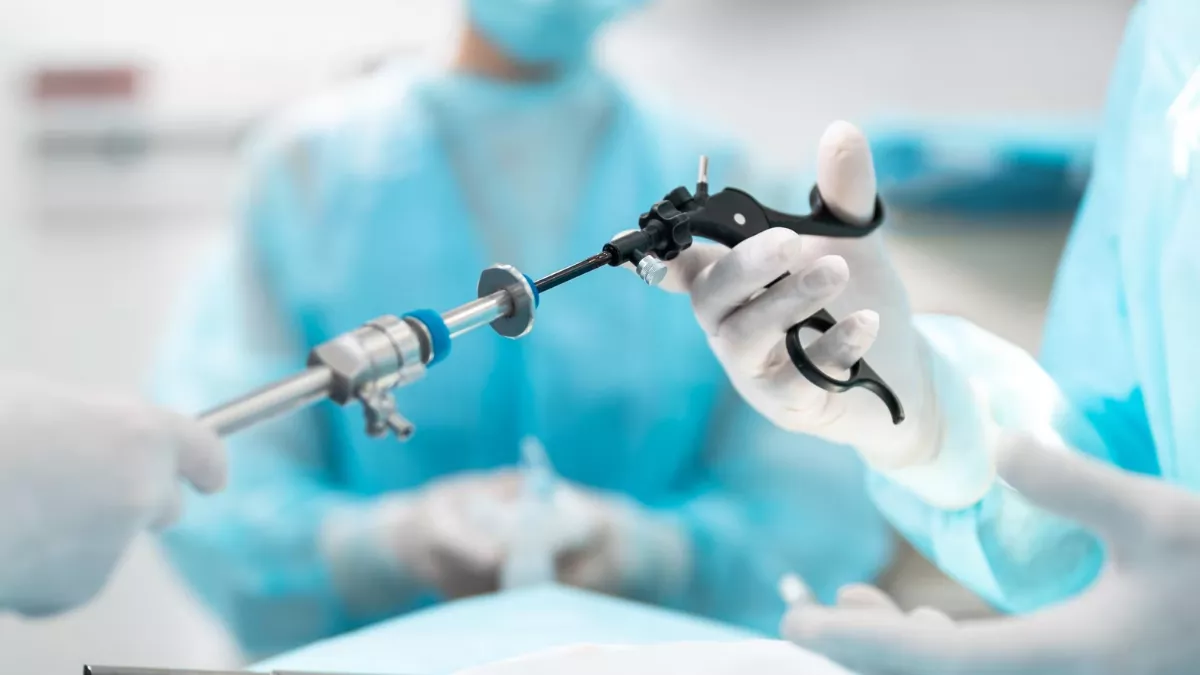
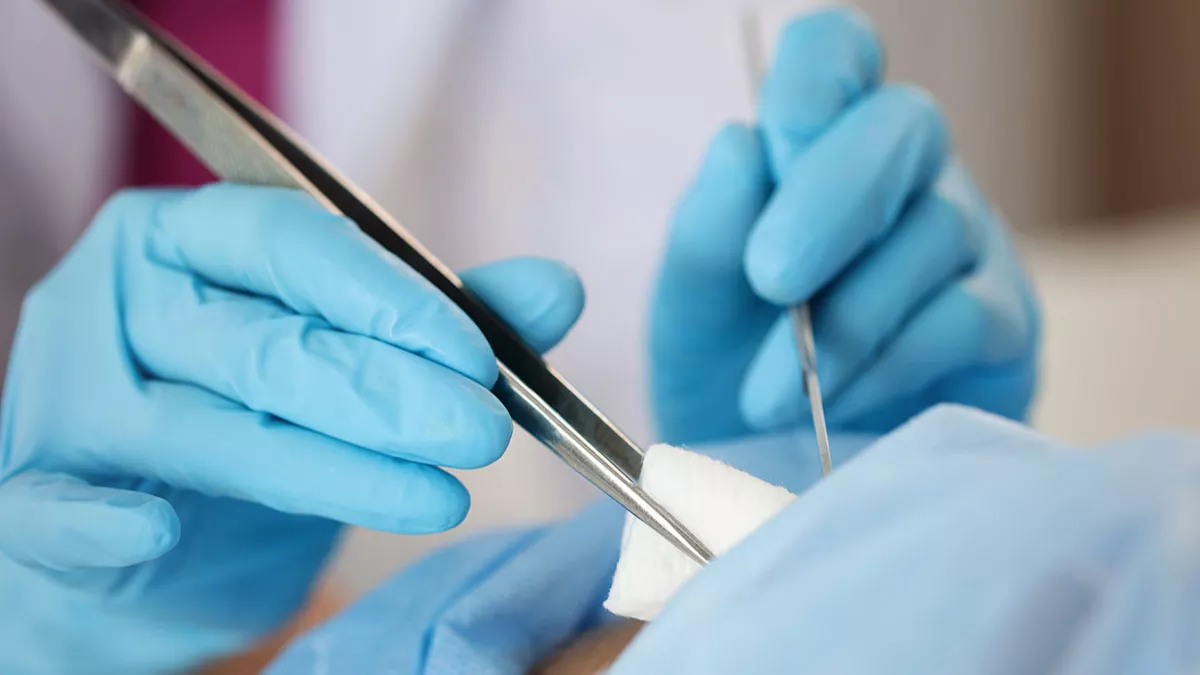
Compartment pressure monitoring is a sterile, bedside procedure performed in the ER or ICU: 1. Device Preparation: The STIC monitor consists of a small handheld digital gauge, a pre-filled saline syringe, and a special needle. The needle is "side-ported," meaning it has tiny holes on the sides rather than just at the tip, to prevent it from getting clogged with muscle tissue. 2. Sterilization: The skin over the tense muscle compartment is cleaned with chlorhexidine. 3. Calibration: The doctor holds the needle at the angle it will be inserted and calibrates the machine to zero. 4. Insertion: The doctor pushes the needle through the skin, through the tough fascia (often feeling a "pop"), and deep into the muscle of the affected compartment. 5. Measurement (Fluid Injection): The doctor injects a tiny amount of saline (less than 0.3 mL) into the muscle. The device reads the resistance the fluid meets trying to enter the tissue. This resistance is the intra-compartmental pressure, measured in millimeters of mercury (mmHg). 6. Multiple Compartment Assessment: Because the lower leg has four compartments and the forearm has three, the doctor must stick and measure the pressure in all suspected compartments.Interpreting the Numbers (The Math of Pressure)
Normal resting tissue pressure is near 0 to 8 mmHg. When the pressure climbs, the danger begins. However, the absolute number is not the only thing that matters; the relationship to the patient's blood pressure is crucial. Doctors calculate the Delta P (ΔP): `Delta P = Diastolic Blood Pressure - Compartment Pressure` If the difference (Delta P) is less than or equal to 30 mmHg, or if the absolute compartment pressure is consistently higher than 30 mmHg, the diagnosis of Acute Compartment Syndrome is confirmed. Capillary blood flow has stopped.The Definitive Treatment: Fasciotomy
The STIC monitoring is purely diagnostic. It tells the medical team that the ticking time bomb is going off. The treatment for confirmed compartment syndrome is brutal but absolutely necessary: an Emergency Fasciotomy. In this surgical procedure, the trauma or orthopedic surgeon makes long, deep incisions through the skin and the fascia down the entire length of the affected arm or leg. This literally "pops" the compartment open, allowing the swollen muscle to bulge out of the body, instantly relieving the pressure and restoring blood flow. The wound is left open and covered with sterile dressings, to be surgically closed days or weeks later when the swelling subsides.
Frequently Asked Questions (FAQ)
Does compartment syndrome only happen after trauma or electrocution?
No. While severe bone fractures and crush injuries are the most common causes, it can also be caused by excessively tight casts or clothing, severe burns, or even intense, unaccustomed exercise (chronic exertional compartment syndrome).Is losing a pulse the first sign?
This is a common misconception. Pulselessness is actually a very late sign. The main arteries that provide a pulse have thick walls and require extreme pressure to collapse. Severe pain and numbness (paresthesia) happen much earlier because the tiny capillary vessels and nerves are crushed first. If you wait until the pulse is gone, the limb is often already dead.Does the STIC test hurt?
Yes, inserting a needle deep into the muscle is painful, and the saline injection causes a sharp sting. If the patient is awake, the doctor will often inject local anesthetic (lidocaine) into the skin first. However, if the patient is already suffering from compartment syndrome, the pain from the swelling is so excruciating that the needle is only a minor discomfort in comparison.Conclusion
The rapid identification of a "tense compartment" in Episode 2 of The Pitt highlights the keen observation required in trauma medicine. Swelling is not just an annoying side effect; in enclosed spaces, it is a lethal force. Compartment pressure monitoring with the STIC device is the only objective way to prove a limb is suffocating, allowing surgeons to intervene with a fasciotomy before amputation becomes the only option.This content is for educational and informational purposes only. It does not replace professional medical advice, diagnosis, or treatment. In case of a medical emergency, call 911/EMS immediately or go to the nearest emergency room.
References: [1] OrthoBullets: Compartment Syndrome [2] UpToDate: Acute compartment syndrome of the extremities [3] StatPearls: Acute Compartment Syndrome [4] American College of Surgeons: ATLS Guidelines