The Pitt — Episode 2, ER scene:
"[Ben] Blood, back in my throat. [Doctor] That's probably from the nosebleed. Short Rapid Rhino, please... I'm going to stick something in your nose to stop the bleeding... Inflate the balloon. How about now, Ben? [Ben] Better." — Trauma Team
A nosebleed (epistaxis) might seem like a minor complaint, but in the context of severe facial trauma, it can be an immediate life threat, flooding the airway with blood. In Episode 2 of The Pitt, patient Ben Kemper suffers a massive facial fracture and is choking on his own blood. The medical team rapidly deploys a specialized device called a "Rapid Rhino" to control the hemorrhage.
What is a Rapid Rhino?
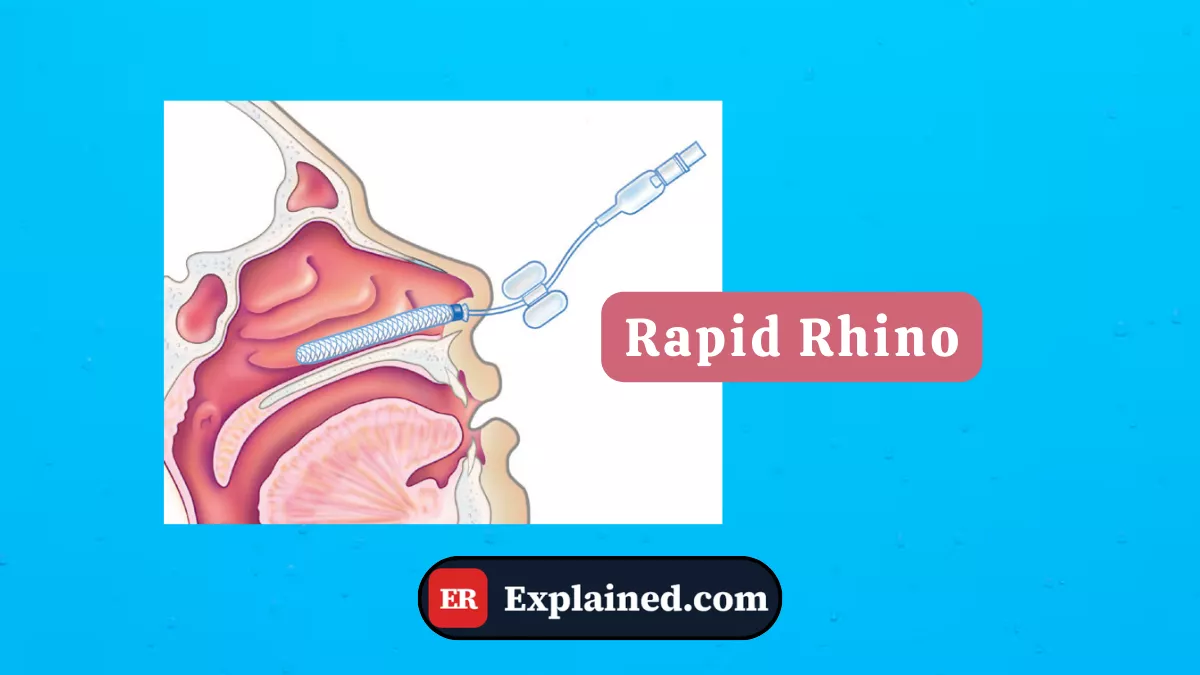
The **Rapid Rhino** is a commercial brand of an inflatable nasal packing device, widely used in emergency departments to treat anterior and posterior epistaxis that does not respond to direct pressure. Visually, before use, it looks like a small, flexible tube or catheter coated in a special fabric. It has two main design features that make it highly effective: 1. **The Internal Balloon:** Inside the device is a balloon that can be inflated with air using a syringe (as the doctor instructs in the scene: "Inflate the balloon"). 2. **The Hydrocolloid Coating:** The exterior of the device is coated with a special fabric containing carboxymethylcellulose (CMC). When this fabric is wet (usually soaked in sterile water prior to insertion), it turns into a slick, slippery gel.
How Does It Work in the ER?
The insertion process is fast, which is crucial in a trauma scenario: 1. **Preparation:** The device is soaked in sterile water for about 30 seconds to activate the lubricating gel. 2. **Insertion:** The doctor slides the device horizontally into the bleeding nostril, following the floor of the nasal cavity. 3. **Inflation:** Once in place, a syringe is attached to the valve at the end of the device, and the balloon is inflated with air. As the balloon inflates, it expands and molds to the internal anatomy of the nasal cavity. This applies **direct, uniform pressure** against the ruptured blood vessels on the nasal wall, physically stopping the bleeding (tamponade). Simultaneously, the gel coating acts as a lubricant to make insertion less painful and also helps promote blood clotting, preventing the device from sticking to the clot when it is removed days later.
Why Was It Used on Ben Kemper?
Ben suffered a Le Fort III fracture (floating face), which shattered the bones of his midface, tearing blood vessels in the nasal cavity. Because he was lying on his back, the blood was pouring down the back of his nose directly into his throat ("Blood, back in my throat"), putting him at risk of choking or aspirating blood into his lungs. The Rapid Rhino was used to plug this massive leak and buy time for the team to secure his airway. To learn more about the trauma that caused this, read about the Le Fort Fracture.
Advantages Over Traditional Packing
Historically, doctors stopped severe nosebleeds by packing the nose with yards of ribbon gauze using forceps—a time-consuming process that was incredibly painful for the patient and carried a high risk of ripping off the clot upon removal. The Rapid Rhino revolutionized this process by being faster to insert, much more comfortable for the patient, and easier to remove due to its gel coating.

Frequently Asked Questions
Does inserting a Rapid Rhino hurt?
Despite the lubricating gel, inserting a balloon into the nose and inflating it causes discomfort and an intense feeling of facial pressure. Doctors frequently spray a local anesthetic into the nose before insertion if time permits.
How long does the device stay in the nose?
Generally, the Rapid Rhino is left in place for 24 to 72 hours to ensure the blood vessel heals properly. The patient often needs to be admitted or see an ENT (Ear, Nose, and Throat) specialist for removal.
Why is the balloon inflated with air and not water?
The balloon is inflated with air because air is compressible. If the patient sneezes or swallows, the air balloon can yield slightly, making it safer and more comfortable than a rigid water-filled balloon (like a Foley catheter).
Conclusion
The use of the Rapid Rhino in Episode 2 of The Pitt demonstrates emergency medicine's relentless focus on airway and hemorrhage control. This small inflatable balloon is a vital tool in the doctor's arsenal, capable of turning a chaotic, life-threatening facial bleed into a controlled situation in a matter of seconds. To explore other airway control tools, see our article on the Endotracheal Tube.
This content is for educational and informational purposes only. It does not replace professional medical advice, diagnosis, or treatment. In case of a medical emergency, call 911/EMS immediately or go to the nearest emergency room.
References: [1] UpToDate: Management of epistaxis [2] PubMed: Efficacy of Rapid Rhino in Epistaxis