Introduction
The Pitt — Episode 3, thoracotomy scene:
"Finochietto retractor." — Surgeon
"Opening the chest. Full suction." — Surgical team
"Pericardium open. We have a finger on the wound." — Dr. Garcia
In this high-stakes scene, a construction worker arrives in the ER with a nail gun projectile lodged in his heart. The medical team must open the chest as an emergency procedure to control the bleeding and save his life. This is where the Finochietto retractor comes into play — an indispensable instrument for holding the thorax open and giving the surgeon access to the heart.
Although it may look like something out of science fiction to a layperson, the Finochietto retractor is one of the oldest and most reliable tools in thoracic surgery. Understanding how it works helps explain why procedures like emergency thoracotomy are possible — and why they are so effective when performed by the right team at the right time.
What is the Finochietto Retractor?
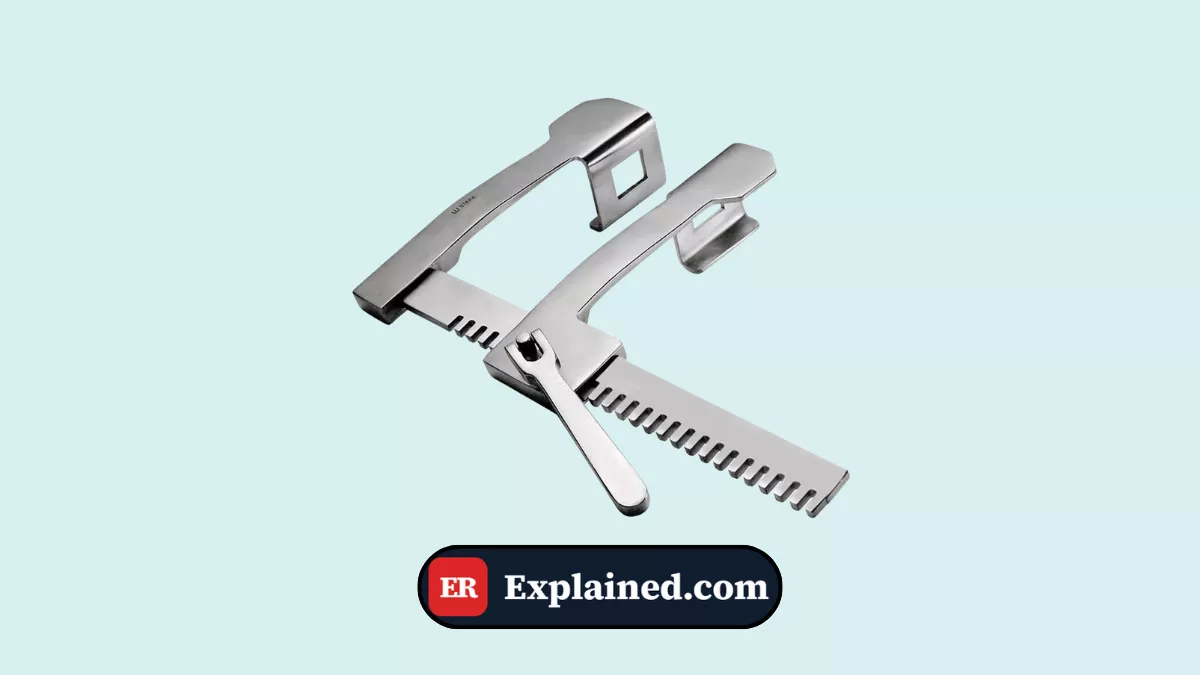
The Finochietto retractor — also known as a rib spreader or costal retractor — is a metal surgical instrument designed to spread the ribs and keep the intercostal space open during thoracic procedures. It was developed by Argentine surgeon Enrique Finochietto in the 1930s and has since become a standard tool in thoracotomies, open cardiac surgeries, and complex pleural drainage procedures.

The instrument consists of two curved metal blades — called valves or blades — connected to a ratchet mechanism with a rotating screw. Turning the screw progressively separates the blades, opening the space between the ribs in a controlled manner and keeping it stable throughout the entire procedure.
Variations of the Finochietto retractor exist for different purposes:
- Standard model: for lateral and posterolateral thoracotomies in adults.
- Pediatric model: smaller blades and narrower opening, adapted for the pediatric thorax.
- Sternal model: used in median sternotomies, such as coronary artery bypass grafting.
The material is surgical stainless steel — autoclavable and reusable. Some modern versions include integrated lighting to improve visibility of the surgical field.
Causes and Clinical Context
The Finochietto retractor is used whenever surgical access to the thoracic cavity is required. Key indications include:
- Emergency thoracotomy: as in the episode, for penetrating trauma with cardiac tamponade, massive hemothorax, or great vessel injury. The goal is immediate hemorrhage control.
- Open cardiac surgery: coronary artery bypass, valve repair or replacement, congenital heart defect correction.
- Pulmonary surgery: lobectomy, pneumonectomy, lung tumor resection.
- Empyema drainage: severe pleural infection unresponsive to conventional chest tubes.
- Thoracic aorta surgery: repair of aneurysms or aortic dissections.
In emergency settings, the Finochietto retractor is most commonly associated with severe thoracic trauma — motor vehicle accidents, gunshot wounds, stab wounds, and, as seen in the episode, workplace tool injuries. The decision to perform an emergency thoracotomy directly in the ER — known as a resuscitative thoracotomy — is made when the patient faces imminent cardiovascular collapse and there is no time to reach the operating room.
Signs and Symptoms
The Finochietto retractor itself is not associated with signs or symptoms — it is an instrument, not a condition. However, the clinical situations that lead to its use have well-defined presentations:
In penetrating thoracic trauma:
- Visible wound on the chest wall
- Severe hypotension refractory to fluid resuscitation
- Absent or muffled heart sounds (sign of tamponade)
- Distended neck veins
- Progressive cyanosis
In cardiac tamponade:
- Beck's triad: hypotension, muffled heart sounds, and jugular venous distension
- Pulsus paradoxus (drop in systolic BP greater than 10 mmHg on inspiration)
- Agitation and altered level of consciousness
In the episode, the patient presented with a blood pressure of 100/65 mmHg and a heart rate of 120 bpm — clear signs of compensated shock that rapidly progressed to tamponade, requiring immediate thoracotomy in the ER.
Diagnosis
The decision to open the chest and use the Finochietto retractor in an emergency is based primarily on clinical assessment and rapid bedside tests:
Extended FAST (eFAST): emergency ultrasound that identifies fluid around the heart (pericardial effusion) and in the pleural space in under two minutes. In the episode, the team identified a growing pericardial effusion with right ventricular collapse — a direct indication for surgical intervention.
Hemodynamic assessment: blood pressure, heart rate, pulse pressure, and fluid responsiveness guide the urgency of the intervention.
Chest X-ray: useful when time allows, to identify hemothorax, tension pneumothorax, or mediastinal widening.
CT scan: indicated only in stable patients, providing precise anatomical detail of the injury before scheduled surgery.
Emergency Use
Emergency thoracotomy with the Finochietto retractor follows a well-established technical sequence:
- Position the patient supine or lateral depending on the planned approach.
- Perform rapid antisepsis of the left lateral chest wall.
- Incise with a scalpel (blade 10) along the fifth left intercostal space, from the parasternal line to the posterior axillary line.
- Deepen the incision through the intercostal muscles, always along the superior edge of the lower rib — to avoid the neurovascular bundle running below each rib.
- Insert the Finochietto retractor blades into the open intercostal space.
- Turn the opening screw progressively until adequate exposure of the surgical field is achieved.
- Advance the endotracheal tube into the right main bronchus to isolate the left lung.
- Open the pericardium longitudinally, anterior to the phrenic nerve, to access the heart.
- Control hemorrhage with digital compression, sutures, or vascular clamps.
In the episode, after opening with the Finochietto, the surgeon identified a single perforation in the left ventricle caused by the nail. Control was achieved with digital compression followed by suture using 2-0 Prolene in a horizontal mattress pattern — the standard technique for penetrating cardiac wounds.
Prognosis and Complications
Emergency thoracotomy has variable prognosis, directly related to the trauma mechanism and time to intervention. In isolated penetrating cardiac injuries — as in the episode — survival rates can reach 60 to 70% when the procedure is performed quickly by an experienced team.
Main complications associated with the use of the Finochietto retractor include:
- Rib fracture from excessive or abrupt opening of the retractor
- Intercostal nerve injury causing chronic post-operative pain
- Surgical site infection and pleural empyema
- Lung injury from compression or laceration during opening
Post-operative follow-up includes respiratory physiotherapy, adequate analgesia, and monitoring for infectious or late hemorrhagic complications.

Frequently Asked Questions
Is the Finochietto retractor used only in cardiac surgeries?
No. Although widely associated with open cardiac surgery, the Finochietto retractor is used in any procedure requiring access to the thoracic cavity — including pulmonary surgeries, empyema drainage, tumor resections, and emergency thoracotomies for trauma. Its versatility and reliability make it a staple in every thoracic surgical suite.
Why is the incision made along the superior edge of the lower rib?
Each rib has a neurovascular bundle — artery, vein, and intercostal nerve — running along its inferior edge. Cutting along the superior edge of the rib below avoids injuring these structures, preventing difficult-to-control arterial bleeding and chronic neuropathic pain after surgery. This is a fundamental rule of thoracic surgery taught during residency training.
What is the difference between emergency thoracotomy and elective thoracotomy?
Emergency thoracotomy — also called resuscitative thoracotomy — is performed directly in the ER, without formal surgical preparation, in patients with imminent cardiovascular collapse from thoracic trauma. Elective thoracotomy is performed in the operating room with general anesthesia, full preparation, and a complete surgical team. The Finochietto retractor is used in both settings, but the conditions and risks are vastly different.
Is recovery from thoracotomy painful?
Yes. Thoracotomy is considered one of the most painful surgical procedures due to the trauma inflicted on the ribs, intercostal muscles, and nerves. Adequate pain management includes multimodal analgesia — combining opioids, anti-inflammatory drugs, and regional blocks such as intercostal nerve block or thoracic epidural analgesia — to ensure comfort and allow early respiratory physiotherapy.
Conclusion
The Finochietto retractor is simple in appearance but fundamental in emergency surgical practice. As shown in Episode 3 of The Pitt, it was a key instrument in saving the life of a patient with a nail lodged in the heart — giving the surgeon rapid and stable access to the operative field in one of the most dramatic procedures in emergency medicine.
Want to learn more about emergency procedures and instruments? Explore our full Medical Instruments category. Also check out our articles on emergency thoracotomy, penetrating thoracic trauma, cardiac tamponade, and endotracheal tube.
Disclaimer: This content is for educational purposes only and does not substitute professional medical evaluation, diagnosis, or treatment. In case of emergency, call 911 immediately.