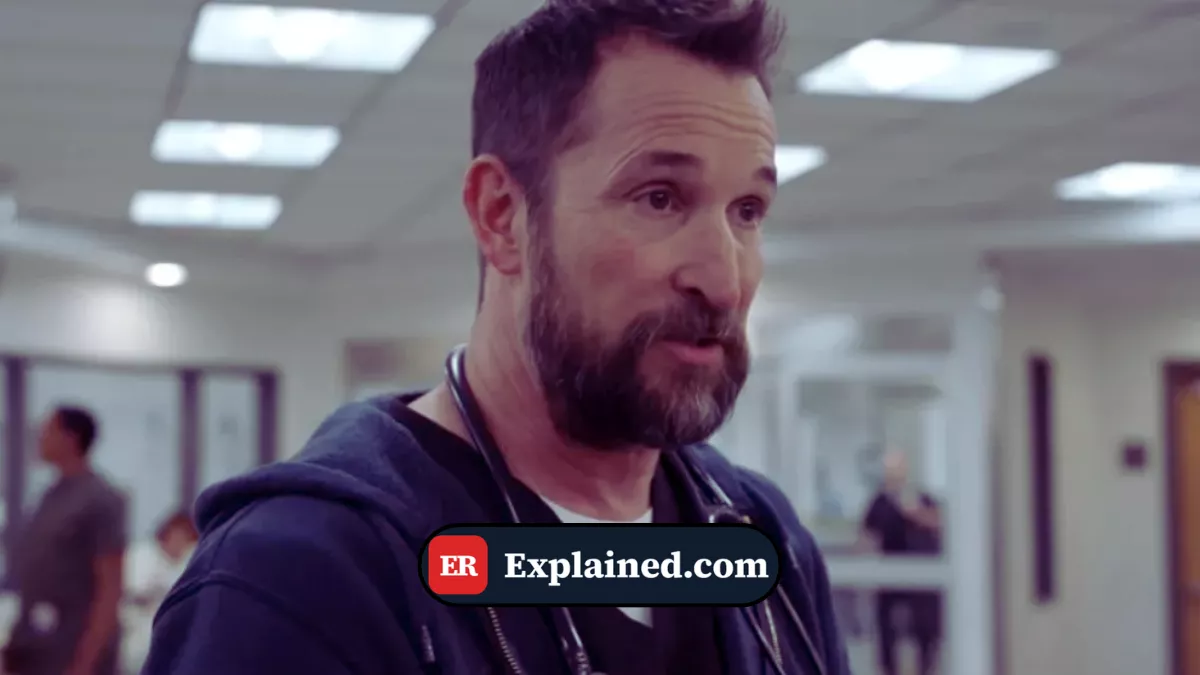
The Pitt — Episode 2, ER scene:
"I have an abdominal GSW in the ambulance bay, code trauma now... Systolic's only 80. 14 gauge left AC. We got two units of whole blood going on the rapid infuser... Morrison's is full of blood. You see that? Tore up his liver. Call the OR. We'll be right up." — Trauma TeamPenetrating torso trauma, specifically a gunshot wound (GSW), is one of the most lethal presentations in emergency medicine. The chaotic and fast-paced scene involving patient Alex in The Pitt perfectly captures the essence of Damage Control Resuscitation. When a bullet tears through the abdominal cavity, the clock starts ticking not in minutes, but in units of blood lost.
The Emergency Scenario: Hemorrhagic Shock from Abdominal GSW
An abdominal GSW poses an immediate threat to life due to the high probability of injury to highly vascular solid organs (such as the liver, spleen, and kidneys) or major vessels (such as the aorta or inferior vena cava). The direct result of this injury is massive, non-compressible internal hemorrhage. The patient rapidly enters hemorrhagic shock, a form of hypovolemic shock where severe blood volume loss leads to decreased cardiac output and failure of tissue perfusion. The "lethal triad of trauma"—hypothermia, acidosis, and coagulopathy—begins to develop almost immediately. If the hemorrhage is not controlled, vital organs fail from a lack of oxygen (ischemia), culminating in traumatic cardiac arrest.Immediate Approach and Protocols
The management of hemorrhagic shock from penetrating trauma shifts away from the traditional ABCs and focuses on **MARCH** (Massive Hemorrhage, Airway, Respiration, Circulation, Head injury/Hypothermia), prioritizing bleeding control: 1. Access and Massive Transfusion: The first step is to establish large-bore venous access (like the 14 gauge mentioned in the episode) to allow for rapid fluid infusion. Modern practice has abandoned aggressive resuscitation with normal saline (which dilutes clotting factors and cools the patient) in favor of the early administration of whole blood or balanced ratios of packed red blood cells, plasma, and platelets (1:1:1). The use of a "rapid infuser" allows for the delivery of warmed blood in a matter of minutes. 2. FAST Exam (Focused Assessment with Sonography for Trauma): Bedside ultrasound is crucial. In the episode, the doctor notes that "Morrison's is full of blood." Morrison's pouch (hepatorenal space) is an area in the right abdomen where free fluid (blood) tends to accumulate. A positive FAST in a hypotensive patient with penetrating abdominal trauma is an absolute indication for immediate surgery. 3. Permissive Hypotension: Until surgical control of the bleeding is achieved, doctors frequently target a lower systolic blood pressure (usually between 80-90 mmHg, like Alex's). Raising the pressure too high, too early can "pop the clot" that the body is trying to form, restarting or worsening the internal hemorrhage. To learn more about how fluids are managed, see our post on Normal Saline.Challenges and Complications
The biggest challenge in an abdominal GSW is that the bleeding is internal and cannot be stopped with direct pressure or tourniquets, unlike extremity injuries. The only definitive treatment is surgical intervention (exploratory laparotomy). The emergency room's role is to keep the patient's brain and heart perfused just long enough to get them to the operating table. Frequent complications include the need for traumatic cardiopulmonary resuscitation if the patient exsanguinates before surgery, bowel injuries that cause fecal contamination and subsequent sepsis, and the development of trauma-induced coagulopathy, where the patient's blood loses the ability to clot, exacerbating the bleeding in a lethal vicious cycle.The Role of the Multidisciplinary Team
Resuscitating a GSW requires a choreographed "dance" among multiple specialists. The emergency physician leads the primary survey, secures the airway, and performs the FAST exam. Trauma nurses establish IV access, administer tranexamic acid (TXA), and operate the rapid blood infuser. The blood bank must release emergency O-negative units almost instantaneously. Simultaneously, the trauma surgeon (as seen with the arrival of the surgical team in The Pitt) evaluates the patient and mobilizes the OR team. Communication between the ED and the OR must be seamless; time spent in the emergency department should be the absolute minimum—the golden rule is "do not delay the trip to the operating room."
Frequently Asked Questions
What is Morrison's pouch mentioned in the episode?
Morrison's pouch (hepatorenal space) is an anatomical cleft between the liver and the right kidney. It is the most common place where free blood accumulates in the abdomen when a patient is lying on their back. Finding fluid there via ultrasound (FAST) indicates severe internal bleeding.Why did they give whole blood instead of normal saline?
Giving large amounts of saline to a bleeding patient only dilutes their remaining red blood cells (which carry oxygen) and clotting factors (which stop bleeding). Whole blood replaces exactly what the patient is losing, improving survival.What does "code trauma" mean?
It is a hospital alert that instantly mobilizes a specialized multidisciplinary team (surgeons, ER docs, anesthesiologists, nurses, blood bank, and X-ray techs) to the resuscitation bay even before the severely injured patient arrives.Why wasn't the blood pressure of 80 treated aggressively to get it to 120?
This is called "permissive hypotension." Keeping the pressure artificially high before closing the hole in the blood vessel or organ only makes the patient bleed faster and blows out the fragile clots the body has tried to form.Conclusion
An abdominal gunshot wound represents the quintessential surgical emergency. Successful management, as orchestrated by The Pitt team for patient Alex, relies on the rapid recognition of hemorrhagic shock, the judicious restriction of crystalloid fluids, early massive transfusion of blood products, and, above all, expedited transport to the operating room. For a broader view on bleeding control, read our article on Hemorrhage Control.This content is for educational and informational purposes only. It does not replace professional medical advice, diagnosis, or treatment. In case of a medical emergency, call 911/EMS immediately or go to the nearest emergency room.
References: [1] ACS: Advanced Trauma Life Support (ATLS) [2] PubMed: Damage Control Resuscitation [3] UpToDate: Hemorrhage in adult trauma [4] ACEP: Trauma Management