Introduction
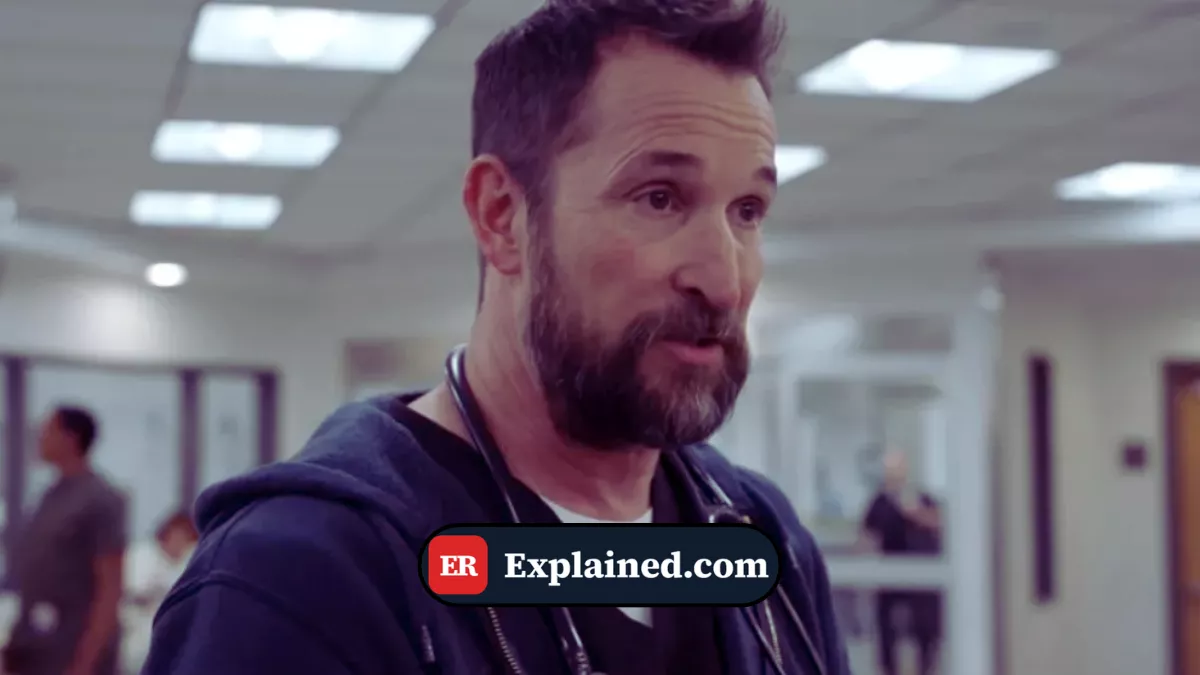
The Pitt — Episode 4, Wendell Stone's management:
"Obvious flail chest. No hemopneumo on POCUS. Good sats and vitals." — Dr. Santos
"We'll block all the nerves going to the broken ribs. One shot — serratus anterior block down to T9. He'll be awake and pain-free." — Dr. Garcia
"You kids and your crazy regional blocks." — Senior physician
Wendell Stone's case in The Pitt presents one of the most complex scenarios in blunt chest trauma: flail chest with multiple rib fractures and underlying pulmonary contusion. The script gets the clinical progression exactly right — from apparent initial stability to respiratory decompensation, through the innovative regional block, and culminating in the iatrogenic pneumothorax from unauthorized BiPAP.
Flail chest remains one of the most severe and high-mortality thoracic injuries in trauma. Management has evolved significantly over recent decades, moving away from early surgical fixation toward aggressive analgesia, selective ventilatory support, and intensive monitoring — precisely what the episode portrays.
What Is Flail Chest with Pulmonary Contusion?
Flail chest occurs when a segment of the chest wall loses its bony continuity with the rest of the rib cage, usually due to fractures of 3 or more consecutive ribs at 2 or more points each. This segment moves paradoxically — inward during inspiration and outward during expiration — in opposition to the normal chest wall motion.

Pulmonary contusion is the parenchymal injury of the lung underlying the unstable segment, caused by direct impact. It is the true driver of respiratory failure in flail chest — not the mechanical paradox itself. Alveolar edema and hemorrhage progressively reduce gas exchange capacity in the hours following trauma, making the condition dynamic and deceptive: the patient may arrive at the ER with acceptable saturation and deteriorate over the next 6 to 12 hours.
Causes & Clinical Context
Flail chest typically results from high-energy thoracic trauma. The most common causes include:
- Motor vehicle accidents: steering wheel or airbag impact — most frequent cause
- Falls from height: especially in elderly patients with osteoporosis
- Crush injuries: as in Stone's case — a speaker tower falling during a music festival
- High-energy direct thoracic trauma: industrial accidents, explosions
Stone arrived at the ER with isolated left chest trauma, multiple rib fractures with visible flail chest, no hemopneumothorax on initial POCUS, saturation of 96% on 4L of O2, and heart rate of 110. Clinically stable — but with the pulmonary contusion silently evolving.
Signs & Symptoms
The clinical picture of flail chest includes:
- Visible paradoxical movement: a chest wall segment moving in the opposite direction from the rest during breathing — pathognomonic sign
- Intense chest pain: especially on deep inspiration and coughing — leads to shallow breathing and atelectasis
- Progressive tachypnea: increasing respiratory rate in the hours following trauma
- Progressive hypoxia: SpO2 falling despite supplemental O2 — sign of worsening pulmonary contusion
- Crackles on auscultation: from alveolar edema and hemorrhage
- Initially normal saturation: the condition can be deceptively stable in the first hours
Diagnosis
Flail chest diagnosis is clinical — the paradoxical movement is visible. Injury extent is assessed by imaging:
- POCUS (extended FAST): rapid initial assessment for hemopneumothorax — negative in Stone's case on arrival
- CT chest with contrast: gold standard — assesses fracture number and location, pulmonary contusion extent, pneumo or hemothorax, major vessel injury. Dr. Garcia ordered CT chest, abdomen, and pelvis with contrast for Stone
- Chest X-ray: faster alternative but less sensitive — may underestimate pulmonary contusion in the first hours
- Serial arterial blood gases: monitors gas exchange evolution and guides intubation decision
Emergency Treatment
Management of flail chest with pulmonary contusion follows a progressive protocol:
- Primary ABCDE assessment with immediate POCUS to exclude hemopneumothorax and tamponade
- Aggressive analgesia as the priority: uncontrolled pain leads to shallow breathing, atelectasis, and pneumonia — inadequate analgesia kills as surely as the trauma itself
- Serratus anterior plane block: ultrasound-guided technique depositing local anesthetic in the fascial plane between the serratus anterior and external intercostal muscles — a single injection blocks multiple dermatomes (T2-T9), as performed by Dr. Garcia in the episode
- Supplemental oxygen: maintain SpO2 above 94% — with caution in undrained pneumothorax
- BiPAP or NIV: indicated only if SpO2 falls despite conventional O2 AND after excluding or draining pneumothorax — the sequence Dr. Santos failed to follow
- Endotracheal intubation: reserved for overt ventilatory failure, decreased consciousness, or persistent hemodynamic instability
- Chest drainage: pigtail or conventional tube if pneumo or hemothorax present
- ICU or step-down admission: for continuous monitoring and multimodal analgesia
The serratus anterior block highlighted in the episode is one of the most impactful innovations in thoracic trauma analgesia. It has progressively replaced multiple intercostal blocks and thoracic epidural catheters in many centers, due to greater technical simplicity and lower complication risk.
Prognosis & Complications
Flail chest mortality has improved significantly with advances in regional analgesia and non-invasive ventilatory support. The main poor prognostic factors are: pulmonary contusion extent, number of fractured ribs, advanced age, and pre-existing pulmonary comorbidities.
Complications to monitor:
- Pneumonia: leading late complication — favored by pain, atelectasis, and immobility
- ARDS: progression of severe pulmonary contusion
- Late pneumothorax: may develop hours after trauma or after positive pressure ventilation — as occurred with Stone
- Hemothorax: blood accumulation in the pleural space — requires drainage if large
- Progressive ventilatory failure: indication for elective intubation before critical deterioration

Frequently Asked Questions
What is the serratus anterior block and why is it preferred for flail chest?
The serratus anterior plane block is an ultrasound-guided regional analgesia technique that deposits local anesthetic (usually bupivacaine or ropivacaine) in the fascial plane between the serratus anterior and external intercostal muscles. A single injection can block the lateral cutaneous branches of intercostal nerves from T2 to T9, covering the entire lateral hemithorax. It is preferred because it is technically simpler than paravertebral or epidural blocks, carries lower risk of hypotension and pneumothorax, and can be easily repeated.
When is intubation indicated for flail chest?
Intubation is not an automatic indication for flail chest. Absolute indications are: overt ventilatory failure (SpO2 below 88% despite NIV), decreased consciousness (GCS below 8), refractory hemodynamic instability, or need for general anesthesia for associated surgery. Unnecessary early intubation increases the risk of ventilator-associated pneumonia.
How does pulmonary contusion evolve in the first hours?
Pulmonary contusion has a characteristic temporal evolution: in the first 1 to 2 hours, the condition may be clinically silent with near-normal X-ray. The peak of alveolar edema and hemorrhage occurs between 24 and 48 hours after trauma. Therefore, patients with flail chest should be admitted for a minimum observation period of 24 to 48 hours, even if apparently stable on ER arrival.
Why was Stone initially stable and then decompensated?
Two factors contributed: the pulmonary contusion naturally evolving in the first hours (progressive reduction of gas exchange) and BiPAP administration without prior pneumothorax drainage — which converted a small pneumothorax into a tension pneumothorax. The case illustrates that initial stability in flail chest does not mean safety — continuous monitoring and frequent reassessments are mandatory.
Conclusion
Stone's case in The Pitt traverses the full spectrum of flail chest management: from immediate clinical diagnosis to innovative regional block, from insidious deterioration to iatrogenic complication and resolution with pigtail catheter. It is a complete teaching scenario demonstrating why flail chest demands continuous vigilance, aggressive analgesia, and extreme caution with any additional intervention.
Also see our article on Tension Pneumothorax from BiPAP and our full Emergency Scenarios category.
This content is for educational purposes only and does not substitute professional medical evaluation, diagnosis, or treatment. In case of emergency, call 911 immediately.