The Worst Kind of Heart Attack
"Seven millimeters ST elevation in the anterior leads. Those are sometimes called tombstones. We're gonna send you up to the cath lab." — Emergency Room
In emergency medicine, not all heart attacks are created equal. Some cause gradual damage, while others destroy the heart in a matter of minutes.
The most feared and lethal of all is the STEMI (ST-Elevation Myocardial Infarction).
A STEMI means that one of the major coronary arteries—the pipes that supply oxygen-rich blood to the heart muscle itself—is 100% blocked by a blood clot. The heart tissue beyond the blockage is literally dying with every passing second.
The Diagnosis: Reading the "Tombstones"
The diagnosis of a STEMI is made almost exclusively through a 12-lead Electrocardiogram (ECG/EKG).
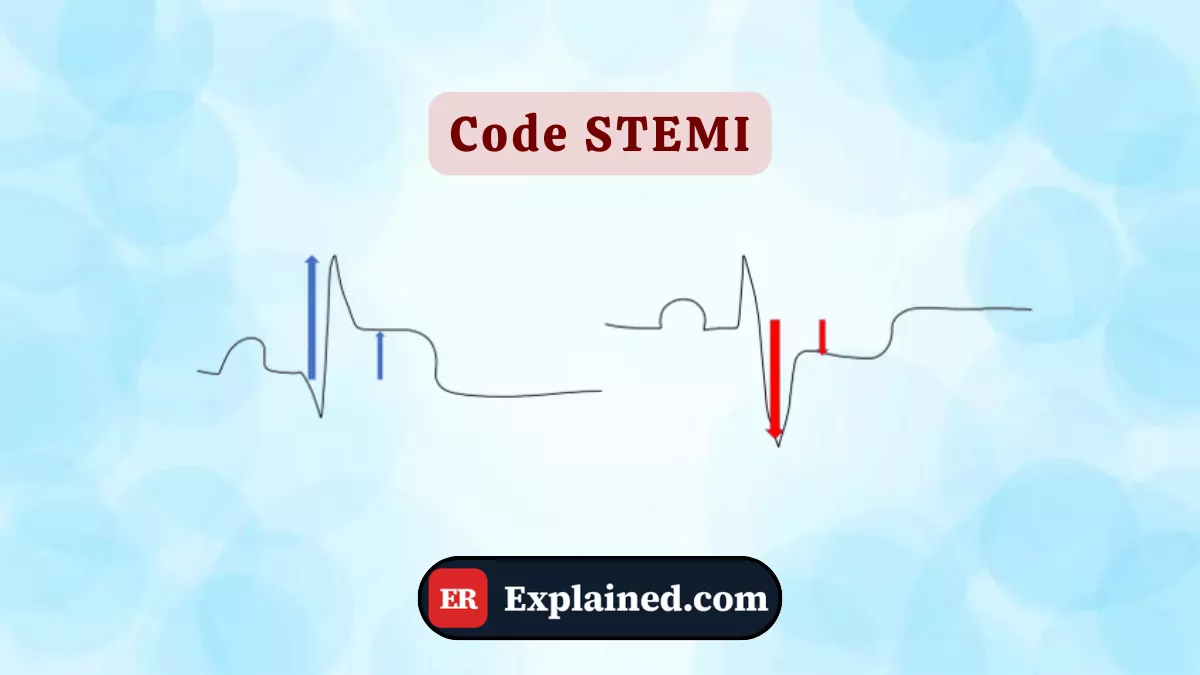
When doctors look at the EKG grid paper, they are looking for a very specific change:
- ST Segment Elevation: The line between two heartbeats, which should be flat, arches upward.
- The Tombstone Shape: In massive infarctions (especially anterior ones, involving the left anterior descending artery, known as the "widow-maker"), this elevation takes on the grim shape of a tombstone.
- Clinical Significance: This pattern indicates that the injury has crossed the entire thickness of the heart wall (transmural infarction).
The Clock Starts: Door-to-Balloon Time
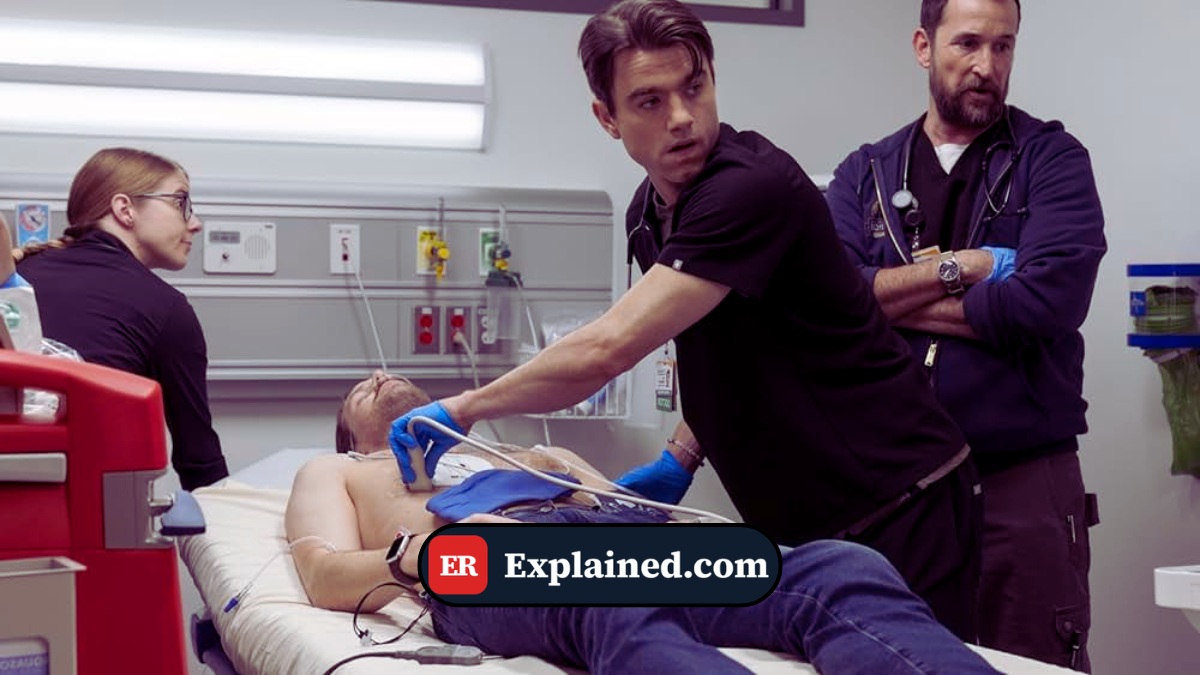
As soon as the ER doctor sees the STEMI pattern, they call a "Code STEMI" overhead. This triggers a massive, coordinated response involving the emergency department, cardiology, and the catheterization lab.
The absolute gold standard for treating a STEMI is the metric known as Door-to-Balloon Time.
This measures the exact time from the moment the patient walks through the ER doors to the moment the cardiologist inflates a balloon inside the heart to reopen the artery. The national goal in the US is under 90 minutes. In top-tier hospitals, the goal is under 60 minutes (like the ambitious 51 minutes mentioned in The Pitt).
Immediate Treatment in the ER
While the cath lab team prepares, the emergency doctor must stabilize the patient using the standard protocol:
- Aspirin: 324 mg chewed immediately to stop the clot from growing (antiplatelet).
- Nitroglycerin: Sublingual or IV to dilate blood vessels and reduce the heart's workload.
- Oxygen: Only if the patient's saturation is below 90%.
- Strong Anticoagulants: Like IV Heparin to thin the blood before surgery.
The Catheterization Lab (Cath Lab)
The patient's final destination is not a traditional operating room, but the Catheterization Lab. There, the patient remains awake while the procedure saves their life.
The interventional cardiologist performs the following steps:
- Inserts a thin tube (catheter) through the artery in the wrist (radial) or groin (femoral).
- Navigates the catheter up to the heart using real-time X-rays (fluoroscopy).
- Injects dye to visualize the exact blockage.
- Passes a tiny wire through the clot.
- Inflates a balloon over the wire to crush the plaque against the artery wall.
- Leaves a stent (a metal mesh) in place to keep the artery permanently open.
The moment the balloon inflates, blood flow is restored. The patient's chest pain frequently disappears instantly, and the heart muscle is saved.

Frequently Asked Questions (FAQ)
What does the phrase "Time is Myocardium" mean?
It is the mantra of emergency cardiology. It means that for every minute the artery remains blocked, more heart muscle (myocardium) dies irreversibly. Dead heart muscle does not regenerate; it turns into scar tissue, which can lead to chronic heart failure for the rest of the patient's life.
Why must aspirin be chewed and not swallowed?
Chewing aspirin (usually four 81 mg baby aspirins) allows the drug to be absorbed directly through the lining of the mouth and enter the bloodstream much faster than if it were swallowed and had to pass through the stomach and liver. In a heart attack, the speed of platelet inhibition is critical.
What happens if the hospital does not have a Cath Lab?
If the hospital does not have catheterization capabilities, or if transfer to another hospital will take more than 120 minutes, emergency doctors will use thrombolytic drugs (like tPA). These powerful medications dissolve the clot chemically. However, they carry a significant risk of causing bleeding in the brain (hemorrhagic stroke), making the cath lab the preferred option whenever available.
Conclusion
The management of a STEMI is one of the greatest triumphs of modern medicine. It transformed a condition that was once a near-certain death sentence or cause of severe disability into a mechanical problem that can be fixed in under an hour.
The key to survival is not just the technology in the cath lab, but the emergency department's ability to recognize the "tombstones" on the EKG in minutes and mobilize the entire hospital in a coordinated race against the clock.
This content is for educational and informational purposes only. It does not replace professional medical advice, diagnosis, or treatment. In case of a medical emergency, call 911/EMS immediately or go to the nearest emergency room.
References: [1] American Heart Association (AHA): Heart Attack Symptoms [2] American College of Cardiology (ACC): STEMI Guidelines [3] StatPearls: ST Elevation Myocardial Infarction (STEMI) [4] UpToDate: Initial evaluation and management of suspected acute coronary syndrome