Introduction
The Pitt — Episode 4, Jenna's discharge:
"We're giving you some fentanyl test strips. These work on pills and liquids. And this is a Narcan spray. Please, just keep it in your purse just in case — if you're at a party and someone's out of it." — Doctor
"You realize how lucky you are?" — Doctor
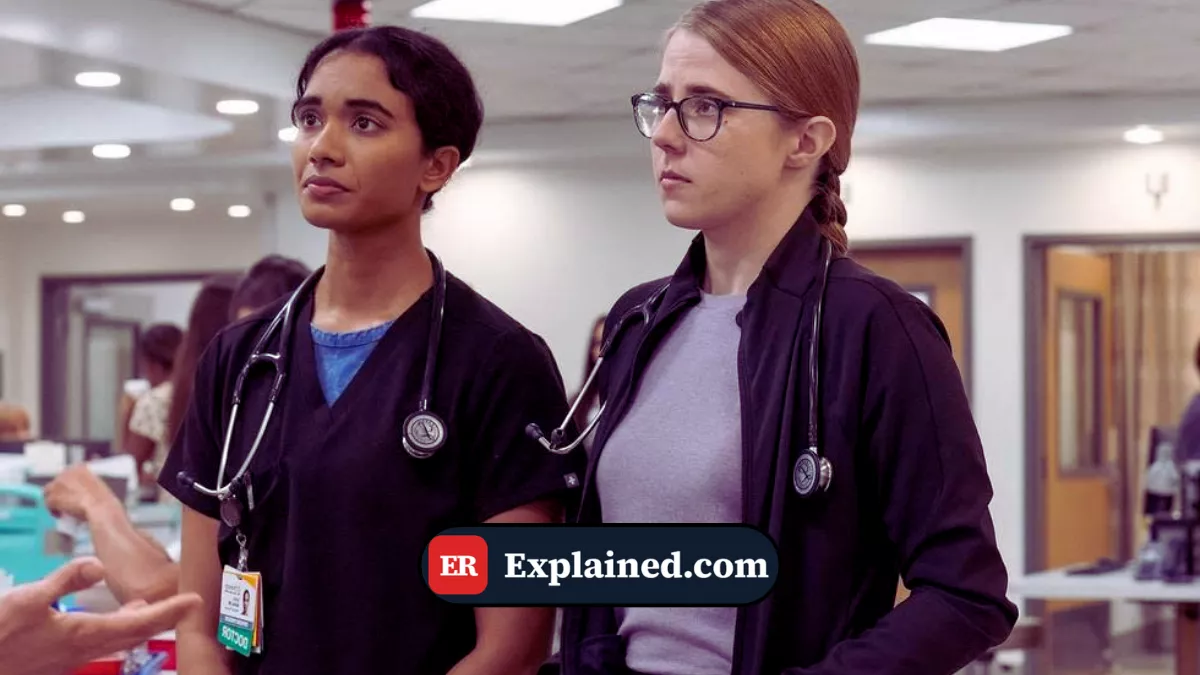
Jenna arrived at the The Pitt ER unconscious, brought in by a panicked friend. She thought she had taken half a Xanax to sleep — it turned out to be fentanyl. Reversed with Narcan, she is discharged with two items that symbolize a public health paradigm shift: fentanyl test strips and a nasal naloxone spray.
This prevention kit is not science fiction. It is a clinical reality that is transforming emergency discharge protocols, pharmacies, and community programs across the United States. Understanding each component can, literally, save a life.
What Are Fentanyl Test Strips and Narcan Spray?
Fentanyl test strips (FTS) are lateral flow immunoassay devices originally developed to detect fentanyl in urine toxicology screenings. Adapted for harm reduction use, they detect the presence of fentanyl and many of its analogs in substances such as pills, powders, beverages, and drug paraphernalia residues.

Narcan nasal spray (naloxone 4mg intranasal) is a ready-to-use formulation of naloxone — a fast-acting competitive opioid antagonist that reverses respiratory depression, sedation, and unconsciousness caused by opioids. Unlike hospital injectable ampoules, the nasal spray can be administered by anyone, without medical training, in seconds.
Together, these two items form the core of any modern opioid overdose prevention strategy — before, during, and after exposure to risk.
Causes & Clinical Context
The opioid crisis in the United States claimed more than 80,000 lives in 2023, with fentanyl and its analogs accounting for the vast majority of deaths. The problem has shifted from marginalized socioeconomic groups to college students, professionals, and people with no history of drug use — like Jenna herself in The Pitt.
Fentanyl is 50 to 100 times more potent than morphine. A dose of just 2 milligrams is lethal for most adults. It is frequently mixed into other drugs — cocaine, MDMA, counterfeit benzodiazepines, counterfeit prescription pills, and even illegally sold sleep aids — without the user's knowledge. This cross-contamination turns any recreational use or self-medication into a gamble with deadly stakes.
Globally, the WHO and UNODC have flagged fentanyl analogs as a growing threat in multiple regions, with supply chains increasingly difficult to trace or control.
How Fentanyl Test Strips Work
The testing process is simple and fast:
- For pills or powders: dissolve a small sample (rice-grain sized) in water — about 1/4 teaspoon is sufficient. Dip the strip for 15 seconds. Wait 2 to 5 minutes.
- For surface residues: add a few drops of water to the residue and apply the strip.
- Reading results: one line = positive for fentanyl. Two lines = negative. No line = invalid test.
Test strips detect fentanyl with over 95% sensitivity, but have limitations: they do not detect all analogs (such as carfentanil in some formulations), and a negative result does not guarantee a substance is safe — other dangerous drugs may still be present.
Diagnosis and Kit Indication
The overdose prevention kit is indicated at hospital discharge for the following patient profiles:
- Opioid overdose survivors, regardless of the substance involved
- Patients with prescriptions for high-potency opioids (transdermal fentanyl, oxycodone, hydrocodone)
- Patients with a history of recreational drug use of any kind
- Adolescents and young adults in college environments with reported access to street drugs
- Family members and caregivers of individuals with substance use disorders
The Substance Abuse and Mental Health Services Administration (SAMHSA) and the CDC recommend that all emergency services distribute naloxone kits upon discharge to at-risk patients.
Emergency Treatment: Narcan Spray Protocol
When opioid overdose is suspected, the nasal naloxone spray protocol follows these steps:
- Recognize the overdose: unconscious or unresponsive, slow or absent breathing, bluish lips, pinpoint pupils
- Call 911 immediately
- Position the victim: supine with head slightly tilted back to open the airway
- Administer the first spray: insert the device tip into one nostril and press the plunger firmly — single dose of 4mg
- Start rescue breathing: if trained, apply mouth-to-mouth ventilation while waiting for effect
- Wait 2 to 3 minutes: if no response, administer a second dose into the other nostril
- Recovery position: once conscious, place in lateral decubitus to prevent aspiration
- Do not leave the victim alone: Narcan's effect lasts 30 to 90 minutes — the opioid may outlast the antidote
Nasal naloxone has approximately 44% bioavailability compared to IV, making it slightly slower to act. In high-potency fentanyl overdoses, 2 to 3 doses may be required.
Prognosis & Complications
When administered in time, naloxone reverses opioid overdose in virtually 100% of cases, provided the respiratory system is still functionally reversible. The prognosis is excellent for patients who receive naloxone within the first 5 minutes of respiratory arrest.
Key points to watch:
- Acute withdrawal syndrome: naloxone can precipitate withdrawal symptoms in opioid-dependent individuals — agitation, nausea, sweating, pain. Generally self-limited
- Recurrence of sedation: the greatest risk. Naloxone's effect is shorter than many long-acting opioids — mandatory hospital monitoring for at least 4 to 6 hours
- Neurogenic pulmonary edema: rare but serious complication of rapid reversal from severe overdose
- False-negative strip result: does not exclude the presence of other drugs or undetected analogs
Frequently Asked Questions
Can anyone use Narcan spray without a prescription?
In the U.S., the FDA approved 4mg naloxone nasal spray (Narcan) for over-the-counter sale in 2023, available at pharmacies nationwide. In many other countries, naloxone still requires a prescription, though harm reduction programs and public health services distribute kits free of charge. The regulatory trend is toward broadening access globally.
Are fentanyl test strips legal?
In most U.S. states, fentanyl test strips were historically classified as drug paraphernalia. However, the majority of states have now legalized them as public health instruments. The CDC and SAMHSA actively support their distribution. Internationally, legality varies — check local regulations before distributing.
Does Narcan spray work on overdoses from drugs other than opioids?
No. Naloxone is a specific opioid receptor antagonist. It has no effect on overdoses from benzodiazepines, alcohol, cocaine, methamphetamine, or other non-opioid drugs. In Jenna's case in The Pitt, she responded to Narcan because the pill she thought was Xanax was actually fentanyl-laced.
Is it dangerous to give Narcan to someone who did not take an opioid?
No. In people who have not taken opioids, naloxone simply has no effect — it does not cause sedation, is not toxic, and presents no clinically relevant risk. This makes its use safe even in situations of uncertainty about the ingested substance.
Conclusion
Fentanyl test strips and Narcan spray represent two of the most cost-effective public health interventions available today. The Pitt responsibly showed that discharging an overdose survivor is not just medical treatment — it is a unique opportunity for education and prevention. Every kit handed out at the ER exit can be the difference between a second chance and a tragedy.
Also explore our articles on Fentanyl: the synthetic opioid and Narcan: the immediate antidote in our Emergency Drugs category.
This content is for educational purposes only and does not substitute professional medical evaluation, diagnosis, or treatment. In case of emergency, call 911 immediately.